
Ensuring Optimum Coolant Flow during Chemotherapy Treatment
- Published in Banksia Controls News
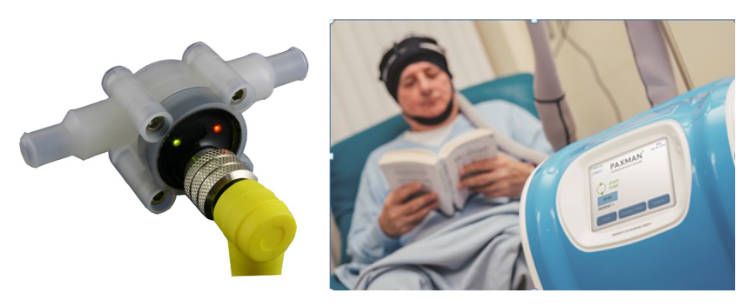
Titan Enterprises reports on how Paxman Coolers Ltd has enhanced its innovative scalp cooling system for chemotherapy treatment through the integration of a Titan 800 Series flowmeter.
About Paxman Scalp Cooling Technology
Paxman has been pioneering scalp cooling technology worldwide for more than 25 years and is committed to improving the effectiveness and accessibility of scalp cooling for cancer treatment patients.
The Paxman Scalp Cooling System is designed to help suitable patients reduce chemotherapy-induced hair loss and retain a sense of normality during treatment. The process works by lowering the temperature of the scalp before, during and after the administration of chemotherapy.
Hair loss can be one of the most visible and emotionally challenging side effects of chemotherapy. Scalp cooling technology provides an option that may help reduce the extent of hair loss for some patients, depending on their chemotherapy regimen and individual circumstances.
How Does a Scalp Cooling System Work?
An automated scalp cooling system circulates chilled coolant through a closely fitted cooling cap worn by the patient. Cooling generally begins before chemotherapy, continues during the treatment and remains in place for a period afterwards.
Lowering the scalp temperature temporarily reduces blood flow around the hair follicles. This may limit the amount of chemotherapy medicine reaching the follicle cells and help reduce hair loss.
The effectiveness of scalp cooling can vary according to the chemotherapy medicine, treatment dosage, cap fit and individual patient factors. Patients should always discuss the suitability of scalp cooling with their oncology care team.
Monitoring Coolant Flow with the Titan 800 Series Flowmeter
To support reliable coolant circulation, Paxman Coolers Ltd turned to Titan Enterprises to develop a flowmeter capable of monitoring the rate of coolant flowing through its patented cooling cap.
Based on the Titan 800 Series turbine flowmeter, the technology enables the system to confirm that coolant flow remains within its specified operating range. This helps the equipment maintain dependable circulation and supports the intended cooling process throughout treatment.
Why Accurate Coolant Flow Matters in Scalp Cooling Equipment
Consistent coolant circulation is important for maintaining controlled cooling throughout the scalp cap. Restricted, interrupted or inconsistent flow may prevent the equipment from operating within its intended conditions.
A flowmeter allows the equipment control system to monitor whether coolant is circulating within the required range. Depending on the system design, the flowmeter output may also support:
- Continuous coolant-flow monitoring
- Detection of restricted or interrupted circulation
- Equipment alarms for abnormal flow conditions
- Identification of blockages or pump-related issues
- Performance monitoring and system diagnostics
The flowmeter measures coolant movement through the system. It does not independently control coolant temperature or determine a patient’s clinical outcome.
Why Paxman Chose the Titan 800 Series Flowmeter
Patrick Burke, Technical Manager at Paxman, commented:
“We chose to integrate the Titan Enterprises 800 Series flowmeter into our Scalp Cooling System because it offered an excellent balance of measurement accuracy, long-term resistance to coolant fluids and high reliability, while also proving easy to maintain.”
Titan 800 Series Flowmeter Features
Operating across six flow ranges from approximately 0.05 to 15 litres per minute, the Titan 800 Series turbine flowmeter combines dependable performance with a compact and competitively priced design.
The flowmeter uses non-metallic wetted components, making it suitable for measuring a variety of compatible liquids, including selected coolants and corrosive chemicals.
Important features of the Titan 800 Series include:
- Six available low-flow measurement ranges
- Flow-rate coverage from approximately 0.05 to 15 litres per minute
- Compact construction for OEM integration
- Non-metallic wetted components
- PVDF body construction
- Sapphire bearings
- Repeatable pulse output
- Resistance to a range of compatible coolant fluids
- Low maintenance requirements
- Suitability for continuous liquid-flow monitoring
These characteristics made the flowmeter suitable for integration into the Paxman Scalp Cooling System, where compact size, repeatable measurement and long-term coolant compatibility were important application requirements.
Choosing a Flowmeter for Medical Cooling Equipment
Selecting a flowmeter for medical, laboratory or specialist cooling equipment requires careful consideration of both the liquid and the operating environment.
Manufacturers and equipment designers should assess:
- Minimum, normal and maximum flow rates
- Coolant type and chemical composition
- Liquid viscosity
- Operating temperature
- System pressure
- Wetted-material compatibility
- Available installation space
- Pipework and connection size
- Required measurement accuracy and repeatability
- Electrical output and controller compatibility
- Maintenance and calibration requirements
The selected flowmeter should be correctly sized for the normal operating range rather than being chosen only according to the maximum possible flow. Correct sizing can improve measurement repeatability and provide more dependable system monitoring.
Compact turbine flowmeters such as the Titan 800 Series can be suitable for OEM cooling applications requiring reliable low-flow liquid measurement and straightforward electronic integration.
Need a Reliable Flowmeter for Your Cooling System?
Banksia Controls supplies Titan turbine flowmeters for medical equipment, laboratory systems, cooling applications, OEM machinery and other low-flow liquid processes.
Our team can help you select a suitable flowmeter based on your coolant type, required flow range, operating temperature, system pressure, connection size and electrical output requirements.
Contact Banksia Controls on +61 3 5157 8309 or email This email address is being protected from spambots. You need JavaScript enabled to view it. to discuss your application, request technical information or obtain a quote.
Explore our Titan Flowmeters range or contact us for guidance on selecting the right flowmeter for your cooling system.
Frequently Asked Questions
How does scalp cooling work during chemotherapy?
A scalp cooling system circulates chilled coolant through a closely fitted cap worn before, during and after chemotherapy. Cooling temporarily reduces blood flow around the hair follicles, which may reduce the amount of chemotherapy medicine reaching them and help limit hair loss.
Can scalp cooling prevent all chemotherapy-related hair loss?
No. Scalp cooling may reduce hair loss for some patients, but it cannot guarantee complete hair retention. Results vary depending on the chemotherapy medicine, treatment dosage, cap fit and individual patient circumstances.
Why is consistent coolant flow important in a scalp cooling system?
Consistent coolant flow helps the equipment maintain controlled circulation throughout the cooling cap. Restricted or interrupted flow may affect equipment performance and can indicate a blockage, pump problem or another issue within the cooling circuit.
What does a flowmeter do in scalp cooling equipment?
A flowmeter measures the rate at which coolant circulates through the equipment. Its output can be connected to the control system to confirm that flow remains within the intended range and support alerts when abnormal circulation is detected.
Does a flowmeter control the coolant temperature?
No. A flowmeter measures liquid movement through the system. Temperature regulation is managed by other cooling and control components. Flow and temperature monitoring may work together within the overall equipment-control system.
What flow range does the Titan 800 Series cover?
The Titan 800 Series is available in six flow ranges covering approximately 0.05 to 15 litres per minute. The appropriate model depends on the application’s minimum, normal and maximum coolant-flow requirements.
How do manufacturers choose a flowmeter for cooling equipment?
Manufacturers should consider the coolant properties, required flow range, viscosity, temperature, pressure, connection size, wetted materials, installation space, measurement repeatability and electrical-output requirements.


